
iPhone Duo: Everything You Need to Know About Apple's Foldable iPhone
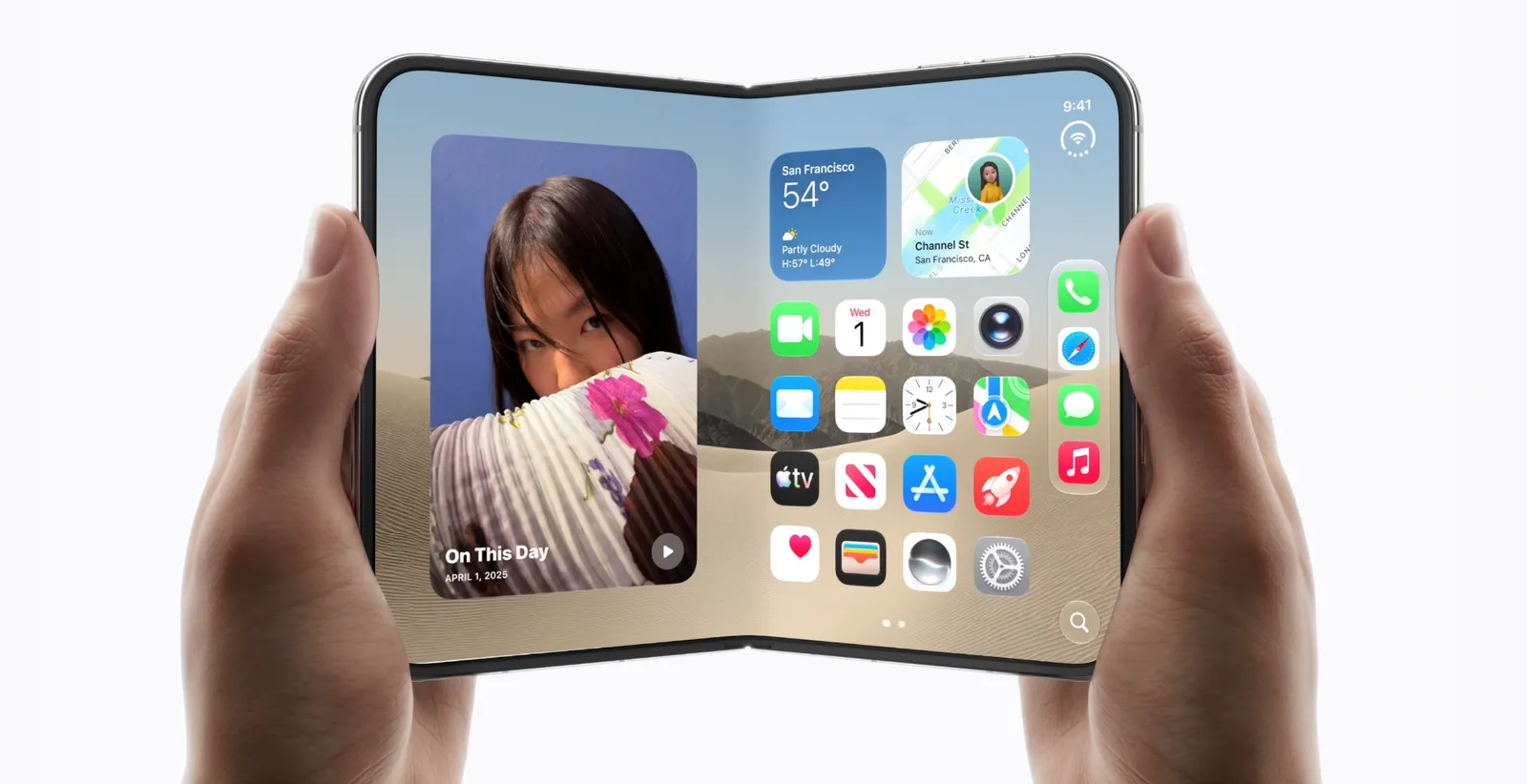
Apple has finally entered the foldable iPhone market with the iPhone Duo, a completely new iPhone built around a larger foldable display while still aiming to fit comfortably in your pocket.
Unlike traditional foldable phones that open into a nearly square screen, Apple says it designed Duo around the way people already use an iPhone. The company wanted a larger display for apps, games, video, photos and Apple Intelligence without turning the device into something awkward to carry.
The result is a passport-sized foldable iPhone with two displays, a new hinge system, an under-display FaceTime camera, A20 Pro performance, a dual-battery design and a redesigned iOS experience.
The iPhone Duo starts at $1,999, with storage options from 256GB to 2TB. Pre-orders begin October 16, and the phone goes on sale October 23, according to Apple's presentation.
Here's everything you need to know about Apple's first foldable iPhone.
What is the iPhone Duo?
The iPhone Duo is Apple's new foldable iPhone. When closed, Apple describes it as being similar in size to a passport, making it easier to hold and use with one hand. When opened, the two sides form a much larger inner display.
Apple's approach is different from the typical foldable phone design.
The company says it wanted to avoid a square-shaped inner screen that can make vertical content feel cramped and leave large black bars around video. Instead, Duo uses a consistent aspect ratio across its displays so moving between the outer and inner screens feels more natural.
That idea is central to the iPhone Duo. It isn't simply an iPhone with a hinge in the middle. Apple redesigned both the hardware and software around the foldable form factor.
iPhone Duo design
When closed, iPhone Duo has a distinctive asymmetric shape with two rounded corners. The two halves connect through a continuous frame surrounding the outer display.
Open the phone and the experience changes dramatically.
The inner display is designed to provide an iPad-like experience while still maintaining the proportions Apple wants from an iPhone. It can be used in both landscape and portrait orientations, giving users considerably more screen space for apps, games, photos and video.
Apple also moved the FaceTime camera behind the display. The camera remains hidden until it is needed, which helps keep the large inner screen free from a conventional camera cutout.
A thinner foldable design
Apple says the iPhone Duo is its thinnest iPhone when opened.
The phone uses an aerospace-grade titanium frame, while the folding display and hinge require a much more complicated internal structure than a conventional iPhone.
That engineering is one of the biggest stories behind Duo.
How does the iPhone Duo hinge work?
The hinge is one of the most important components in any foldable phone, and Apple has developed a variable-torque hinge for Duo.
The hinge uses magnets and is designed to provide a smooth opening and closing motion.
But Apple didn't stop at the hinge itself. The company describes a complex display and structural system designed to keep the foldable panel flat and reduce visible imperfections.
The display uses multiple layers, including a custom polymer designed to increase stiffness, scratch-resistant coating, high-strength glass, viscoelastic adhesives and a titanium plate.
Apple says the hinge contains more than 100 tiny components.
The company also uses AI-assisted hinge matching, confocal laser scanning and 3D printing techniques to fine-tune the components and reduce waviness in the display.
That level of engineering matters because foldable phones face a problem traditional smartphones don't: the display has to survive repeated bending while still looking and feeling like a normal premium screen.
iPhone Duo display
The inner display is the biggest display Apple has put on an iPhone, according to the presentation.
Apple designed the screen around a consistent aspect ratio so the outer and inner displays feel connected rather than like two unrelated screens.
The idea is simple.
Use the outer screen when you want a normal phone experience. Open Duo when you need more room.
That could be useful for:
Watching videos
Reading
Editing photos
Playing games
Using multiple apps
Browsing the web
Working with documents
Using Siri and Apple Intelligence
Viewing photos and memories
The software is designed to move with you between the two displays.
iOS 27 has been redesigned for Duo
A foldable phone needs software that understands the changing screen size. Apple has redesigned iOS 27 for the iPhone Duo's form factor.
Controls have been moved to make better use of the larger screen. The Dock becomes vertical, and the status bar takes a more compact form.
Apple also designed the interface so content can expand naturally when the phone moves from the outer display to the inner display.
This means the foldable experience isn't simply about opening the hardware. iOS needs to understand whether you're holding Duo closed, partially opened or fully opened.
That software integration could be one of the biggest differences between Apple's foldable approach and existing foldable phones.
iPhone Duo camera features
The iPhone Duo also gets several camera features that take advantage of its two-screen design.
One of the most interesting is Dual Capture.
With Dual Capture and FaceTime, Duo can show both the front and rear camera feeds at the same time. That means you can appear on screen while also showing the person on the other end what you're looking at.
There's another clever use of the outer display.
Because the outer screen can act as a preview, you can use the rear cameras to take higher-quality selfies while looking at yourself on the external display.
Apple calls another feature Duo Preview. It allows the person you're photographing to see themselves on the outer display, making it easier for them to adjust their pose and framing.
For parents, Apple has also included a feature called Kid Cue, which uses animations to get a child's attention while taking photos.
Smart Take
Duo also introduces Smart Take, powered by the A20 Pro chip and on-device models.
The feature follows a scene in real time and automatically takes a photo when everyone is positioned and ready.
That solves a familiar problem with group photos: setting a timer, running into position and hoping everyone is looking at the camera at the right moment.
With Duo, Apple says Smart Take can handle that process automatically.
The foldable design also makes wide-angle, full-body selfies easier because the large display gives you more room to frame the shot.
iPhone Duo performance: A20 Pro
Apple's A20 Pro chip powers the iPhone Duo.
The chip also powers the iPhone 18 Pro lineup, and Apple has built Duo's internal architecture around the demands of a large foldable display.
The A20 Pro isn't only responsible for traditional processing. It also handles on-device AI workloads, including features such as Smart Take.
Apple says Duo can deliver up to 35% higher sustained performance than the iPhone 17 Pro.
That sustained-performance figure is particularly interesting for a foldable phone because the larger display can encourage longer gaming, video and productivity sessions.
iPhone Duo cooling system
Performance is only useful if a phone can maintain it.
Apple has therefore connected the processor and thermal system directly through a new cooling design.
The iPhone Duo uses a vapor chamber designed to move heat away from the processor and distribute it across a larger area.
The cooling architecture is important for sustained workloads such as gaming, video editing and AI processing.
Instead of chasing short benchmark bursts, Apple is focusing on maintaining performance when the phone is being used for longer periods.
iPhone Duo C2 modem
Duo also comes with Apple's new C2 modem.
Apple says the C2 combines the baseband, transceivers, power management, firmware and software into an integrated system.
The modem also uses AI algorithms to improve reliability and reconnect more quickly when network conditions change.
According to Apple's presentation, the C2 can deliver up to 50% faster uploads compared with the C1X, while using up to 15% less energy.
The US version also supports 5G mmWave.
iPhone Duo battery life
Battery design is another area where a foldable phone has to take a different approach.
Because Duo contains two halves, Apple has placed a battery on each side of the device.
The phone uses custom silicon to manage charging, discharging and battery balancing between the two sides.
Apple claims up to:
31 hours of inner-display video playback
44 hours of outer-display video playback
Up to 24 hours when using both displays equally
The phone can reach around 50% charge in 20 minutes.
Apple also says a five-minute charge can provide up to five hours of outer-display video playback.
Actual battery life will depend on how the phone is used, especially with the large inner display.
iPhone Duo storage options
The iPhone Duo starts with 256GB of storage.
Apple offers storage capacities ranging up to 2TB.
That is a significant amount of storage for a phone, particularly for users who shoot a lot of high-resolution photos and video or want to keep large files and apps locally.
The higher storage tiers will also make Duo more interesting for people who want to use it as a productivity device rather than simply a larger phone.
iPhone Duo price
The iPhone Duo starts at:
$1,999
Storage ranges from 256GB to 2TB.
Apple says trade-in offers will also be available through Apple and its partners.
That starting price puts Duo firmly in the premium foldable category.
The real question for buyers won't simply be whether Duo is more expensive than a conventional iPhone. It will be whether the larger display and foldable design are useful enough to justify the extra cost.
iPhone Duo release date
Apple's presentation gives the following schedule:
Pre-orders: October 16
Available: October 23
The company says trade-in offers will also be available.
Availability and pricing can vary by market, so buyers outside Apple's launch markets should check their local Apple store for the final regional details.
iPhone Duo accessories
Apple is also introducing accessories designed specifically for the foldable form factor.
The iPhone Duo Folio includes an integrated kickstand that folds away when not needed.
Apple is also offering a two-part Duo case. Each section wraps around one half of the phone to provide protection while still allowing the device to fold.
The kickstand could be particularly useful with the larger inner display, especially for watching video or using Duo hands-free.
What makes iPhone Duo different?
The biggest difference isn't simply that the phone folds.
It's how Apple has connected the foldable hardware to the rest of the iPhone experience.
The company has changed the display proportions, redesigned iOS for two screens, built a new hinge, added an under-display camera and created camera features that use the outer screen in ways a regular iPhone cannot.
The result is closer to a phone that becomes a larger device when you need it, rather than a small tablet that happens to fold.
Apple's presentation also positions the iPhone Duo as part of a broader ecosystem built around an "intelligent personal hub." The iPhone sits at the center, with Apple Intelligence, Apple Watch and AirPods extending that experience.
iPhone Duo: Key specifications at a glance
Feature | iPhone Duo |
|---|---|
Design | Foldable |
Closed size | Similar to a passport, according to Apple |
Inner display | Largest display on an iPhone |
Aspect ratio | Consistent across outer and inner displays |
Frame | Aerospace-grade titanium |
Hinge | Variable-torque hinge with magnets |
FaceTime camera | Under-display |
Processor | A20 Pro |
Modem | C2 |
Storage | 256GB to 2TB |
Battery | Dual-battery design |
Inner-display video | Up to 31 hours |
Outer-display video | Up to 44 hours |
Charging | Around 50% in 20 minutes |
Starting price | $1,999 |
Pre-orders | October 16 |
Availability | October 23 |
The specifications and dates above come from Apple's supplied presentation transcript.
Is the iPhone Duo worth waiting for?
That depends on what you want from an iPhone.
If you mostly use your phone for calls, messaging, social media and quick photos, a conventional iPhone may still make more sense.
Duo is aimed at people who can make use of the extra screen.
The larger display could be useful for watching content, editing photos, gaming, reading, working with documents and using AI features. The outer display means you don't have to open the phone every time you want to perform a simple task.
The camera system also benefits from the foldable design. Features such as Duo Preview, Dual Capture and Smart Take wouldn't work the same way on a conventional iPhone.
The price, though, is significant.
At $1,999 before considering storage upgrades, Duo costs considerably more than Apple's standard Pro models. Buyers will have to decide whether the foldable form factor changes how they use their phone enough to justify that difference.
iPhone Duo could change what we expect from an iPhone
Apple's first foldable iPhone isn't just about making the screen bigger.
The company is trying to make a foldable phone behave like an iPhone when closed and something closer to a larger computing device when opened.
The hardware tells only half the story. The hinge, structural display, dual batteries, A20 Pro chip and C2 modem are all built around the foldable design. iOS 27 then ties the two displays together so the experience can change as the phone opens.
At $1,999, iPhone Duo won't be an impulse purchase. But it could appeal to users who want one device that can move between a normal phone experience and a much larger screen without carrying a second device.
Apple's first foldable iPhone is therefore less about simply joining the foldable-phone race and more about defining what the company thinks a foldable iPhone should be.
Comments
No comments yet — be the first to comment.