
iPhone 18 Pro vs iPhone 17 Pro Camera: What's New and Is It Worth the Upgrade?
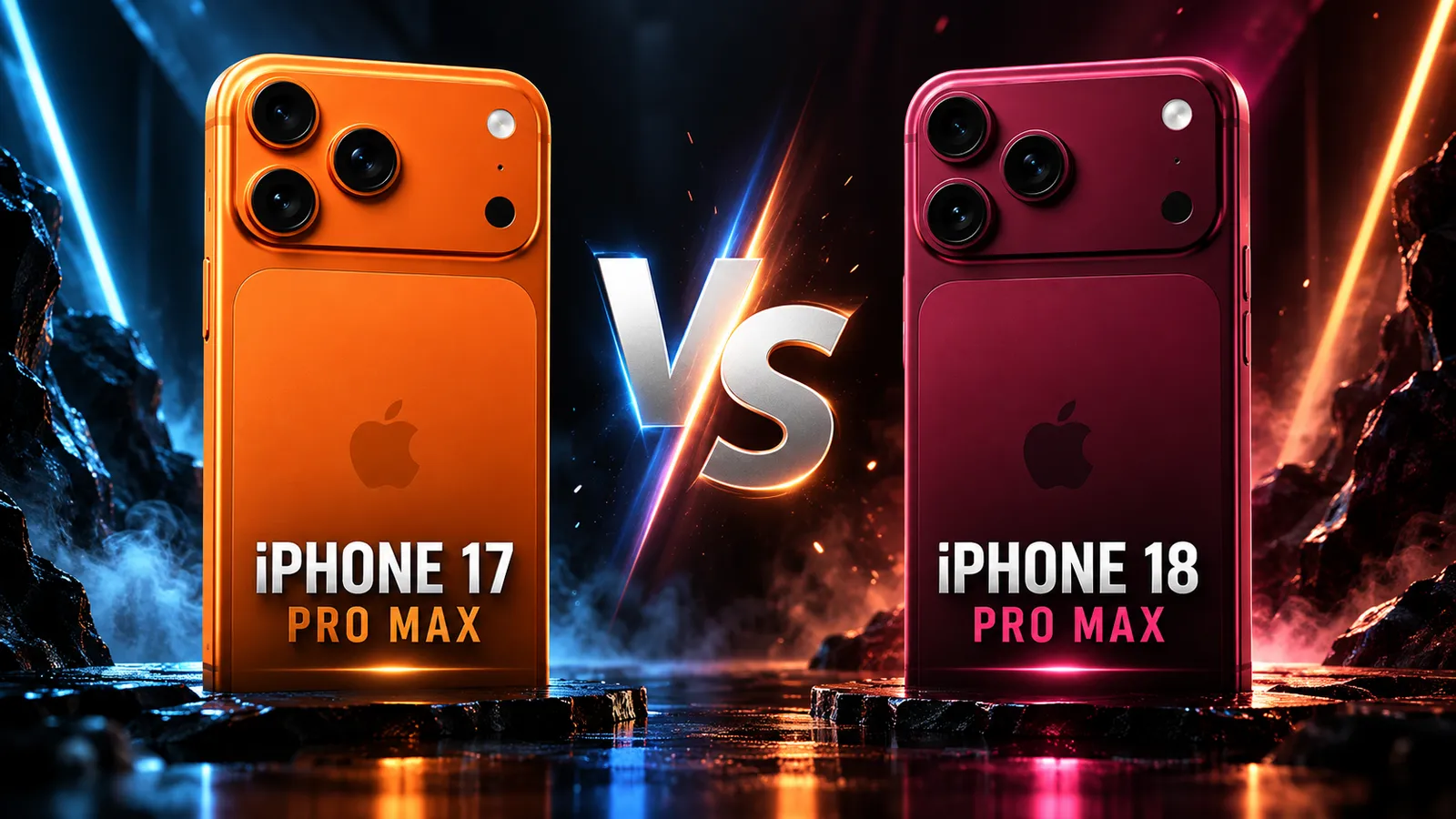
The iPhone 18 Pro doesn't completely change Apple's Pro camera system. In fact, much of the hardware looks familiar when you compare it with the iPhone 17 Pro.
Both phones have three 48MP rear cameras, a 48MP Ultra Wide, a 48MP Telephoto with 4x and 8x optical-quality options, and a 48MP Main camera. The biggest camera change on the iPhone 18 Pro is the variable aperture on the 48MP Fusion Main camera.
That one change has a wider effect than it might initially seem. It gives the iPhone 18 Pro control over how much light enters the Main camera and how much of a scene stays in focus.
So, is the iPhone 18 Pro camera a big upgrade over the iPhone 17 Pro?
For most casual photographers, probably not a night-and-day change. For people who shoot portraits, low-light photos or video and want more manual control, the difference is much more interesting.
iPhone 18 Pro vs iPhone 17 Pro camera: What's different?
Here's the quick comparison.
Camera feature | iPhone 18 Pro | iPhone 17 Pro |
|---|---|---|
Main camera | 48MP Fusion Main | 48MP Fusion Main |
Main aperture | ƒ/1.48, ƒ/1.8, ƒ/2.8, ƒ/4.0 | ƒ/1.78 fixed |
Ultra Wide | 48MP, 13mm, ƒ/2.2 | 48MP, 13mm, ƒ/2.2 |
Telephoto | 48MP, 100mm/200mm, ƒ/2.8 | 48MP, 100mm/200mm, ƒ/2.8 |
Optical-quality zoom | Up to 8x | Up to 8x |
Digital photo zoom | Up to 40x | Up to 40x |
Pro aperture controls | Yes | No |
Pro shutter/white balance controls | Yes | No |
Photographic Styles | Photographic Styles 3 | Latest-generation Photographic Styles |
Texture and grain controls | Yes | No |
Apple Reference Image | Yes | No |
4K Dolby Vision | Up to 120fps | Up to 120fps |
Cinematic mode | Up to 4K Dolby Vision 60fps | Up to 4K Dolby Vision 30fps |
Video digital zoom | Up to 24x | Up to 15x |
The core camera layout remains very similar, but the iPhone 18 Pro adds new controls around the Main camera and expands several video features.
1. The biggest change: variable aperture
This is the headline camera upgrade.
The iPhone 17 Pro's 48MP Fusion Main camera has a fixed ƒ/1.78 aperture. The iPhone 18 Pro replaces that with a variable aperture offering four settings:
ƒ/1.48
ƒ/1.8
ƒ/2.8
ƒ/4.0
Apple says the system uses six laser-cut blades and can automatically adjust the aperture according to lighting and depth-of-field requirements.
That gives the iPhone 18 Pro something the 17 Pro doesn't have: physical aperture control on the Main camera.
What does that mean for photos?
At ƒ/1.48, the camera can let in more light and create a shallower depth of field.
At ƒ/4, more of the scene can remain in focus.
So instead of the Main camera having one fixed aperture, the iPhone 18 Pro can adapt the lens to the scene.
For example, Apple highlights ƒ/1.48 for darker environments, ƒ/1.8 for portraits and ƒ/4 for keeping more people in focus in group shots.
That's a meaningful change for photographers who want to influence the look of a photo before pressing the shutter.
2. Low-light photography gets more control
Apple says the new Main camera can widen its aperture to ƒ/1.48 in darker environments, allowing more light to reach the sensor.
The company also says the new sensor and computational imaging pipeline improve image quality, with sharper and more detailed photos and better low-light results.
The iPhone 17 Pro already performs well in low light, so this shouldn't be viewed as the 18 Pro suddenly making the 17 Pro's Night mode obsolete.
The difference is that the 18 Pro has another way to manage difficult lighting.
The camera can automatically adjust the aperture, while users can also manually select an aperture through the new Pro Controls.
3. Portrait photography gets a new tool
The variable aperture is also useful for portraits.
A wider aperture can produce more background separation, while a narrower aperture can keep more of the scene sharp.
Apple specifically describes ƒ/1.8 as an aperture suited to portraits and says ƒ/4 can help keep more of a group in focus.
This is different from simply using Portrait mode.
The aperture is part of the camera's optical system, while Portrait mode uses computational processing to create depth effects.
That gives the iPhone 18 Pro photographer another way to influence depth of field.
4. The Ultra Wide camera is largely unchanged
If you're expecting a completely new Ultra Wide camera, the upgrade is much smaller.
Both generations use a 48MP Fusion Ultra Wide camera with a 13mm focal length, ƒ/2.2 aperture and 120-degree field of view. Both also support macro photography.
So if most of your photography uses the 0.5x camera, there's less reason to upgrade specifically for the hardware.
The larger changes are concentrated around the Main camera and the way the camera system is controlled.
5. The Telephoto camera is also very familiar
The Telephoto story is similar.
The iPhone 18 Pro and iPhone 17 Pro both have:
48MP Fusion Telephoto
100mm equivalent 4x focal length
200mm equivalent 8x optical-quality option
ƒ/2.8 aperture
Tetraprism design
3D sensor-shift optical image stabilisation
Autofocus
Both phones offer an 8x optical-quality zoom and a 16x optical-quality zoom range.
This is one of the clearest reasons why an iPhone 17 Pro owner shouldn't automatically upgrade for the camera alone.
The 17 Pro already has a very capable long-range camera system.
6. Zoom is not a major photo upgrade
On paper, the photo zoom specifications are almost identical.
Both phones offer:
2x optical-quality Telephoto from the Main camera
4x Telephoto
8x optical-quality Telephoto
16x optical-quality zoom range
Up to 40x digital photo zoom
So if your main reason for upgrading is getting substantially more reach, the iPhone 18 Pro doesn't provide that.
The 8x optical-quality option was already a major feature of the iPhone 17 Pro.
7. iPhone 18 Pro adds manual aperture control
This is where the camera experience changes more significantly.
The new Pro Controls on iPhone 18 Pro let you manually adjust:
Lens aperture
Shutter speed
White balance
Histogram
The iPhone 17 Pro does not offer the same manual aperture control because its Main camera uses a fixed ƒ/1.78 aperture.
For someone who normally shoots in automatic mode, this may not matter much.
For photographers who already adjust shutter speed and white balance manually, it's a more meaningful upgrade.
Why aperture control matters
Imagine photographing a group of people.
With a wider aperture, you may get more background separation, but some people positioned farther from the focal plane may fall outside the sharp area.
Switching toward ƒ/4 gives you more depth of field.
The phone can also make this decision automatically, so you don't have to manually change the setting every time.
8. Photographic Styles 3 adds texture and grain
The iPhone 18 Pro also introduces Photographic Styles 3, with new controls for texture and grain.
Apple says these controls let users adjust colour and skin qualities together and create different visual treatments, including an artful film look.
The iPhone 17 Pro has the previous generation of Photographic Styles, but not these new texture and grain controls.
This isn't a camera hardware upgrade, but it changes how much control you have over the final appearance of a photo.
For people who like to create a consistent visual style directly in the Camera app, it's a useful addition.
9. Apple Reference Image is new
Another new photography feature is Apple Reference Image.
Apple says the iPhone 18 Pro's Main camera can sign sensor data at the time of capture. A Reference image can then be viewed alongside the main photo as an unalterable reference for what the sensor captured.
This isn't something most people will use every day.
It is more relevant to photographers, journalists, creators and others who need to establish a reference for the original captured image.
The iPhone 17 Pro doesn't have this feature.
10. Video is where the iPhone 18 Pro pulls further ahead
The basic video capabilities remain strong on both generations.
Both support 4K Dolby Vision recording up to 120fps using the Main camera, 1080p recording up to 120fps, ProRes up to 4K 120fps with external recording, ProRes RAW, Apple Log 2 and Genlock.
But the iPhone 18 Pro adds several improvements.
Cinematic mode goes to 60fps
The iPhone 17 Pro supports Cinematic mode up to 4K Dolby Vision at 30fps.
The iPhone 18 Pro raises that to 4K Dolby Vision at 60fps. It also lets you apply Cinematic effects to compatible video after recording.
That makes the new model more flexible for creators who want cinematic-looking footage while shooting at a higher frame rate.
Video zoom increases
The iPhone 17 Pro supports digital video zoom up to 15x.
The iPhone 18 Pro increases this to 24x.
That's not the same thing as adding more optical zoom, but it gives you a wider digital range when recording video.
Better low-light video
Apple also lists improved low-light video at 1080p for the iPhone 18 Pro.
Combined with the variable-aperture Main camera, this is one of the more practical improvements for people who record video regularly.
11. What stays the same?
The iPhone 18 Pro camera upgrade is easier to understand when you look at what's unchanged.
Both phones have:
Three 48MP rear cameras
48MP Main
48MP Ultra Wide
48MP Telephoto
4x Telephoto
8x optical-quality Telephoto
16x optical-quality zoom range
40x digital photo zoom
18MP Center Stage front camera
48MP macro photography
ProRAW
Spatial photos
Night mode
Second-generation sensor-shift stabilisation on the Main camera
3D sensor-shift stabilisation and autofocus on the Telephoto
That's why the upgrade isn't as straightforward as "three new cameras versus three old cameras."
The underlying camera arrangement is already very similar.
iPhone 18 Pro vs iPhone 17 Pro camera: feature comparison
The chart highlights where the numerical differences are easiest to see. The aperture count represents the four selectable aperture settings on the 18 Pro versus the fixed aperture on the 17 Pro, rather than a measurement of aperture quality.
Should iPhone 17 Pro owners upgrade for the camera?
For most owners, the answer is probably no unless you specifically want the new Main-camera controls.
The iPhone 17 Pro already has a three-camera 48MP system, 8x optical-quality zoom, ProRAW, strong video recording and a 48MP Telephoto.
The iPhone 18 Pro improves the experience in several areas, but its biggest advantage is control rather than a completely different camera system.
Upgrade if you care about:
Variable aperture
Manual aperture control
Better low-light photography
More depth-of-field control
4K Cinematic video at 60fps
24x digital video zoom
Photographic Styles 3
Texture and grain controls
Apple Reference Image
Improved low-light video
These are particularly useful if you take lots of portraits, shoot video or like controlling the look of your photos.
Keep the iPhone 17 Pro if:
You're happy with automatic photography.
You mainly use the 4x or 8x Telephoto.
You don't need manual aperture control.
Your current low-light photos already meet your needs.
You don't shoot much video.
You don't care about texture and grain controls.
The 17 Pro remains a very capable camera phone.
What about someone buying a Pro iPhone for the first time?
This is a different decision.
If you're choosing between the two rather than upgrading from one to the other, the iPhone 18 Pro makes more sense if the price difference is reasonable for you.
You're getting the same strong multi-camera foundation as the 17 Pro, but with the new variable-aperture Main camera and additional camera controls.
The question isn't whether the iPhone 17 Pro is good enough. It is.
The question is whether you will actually use the new controls.
iPhone 18 Pro vs iPhone 17 Pro camera: Is the upgrade worth it?
The iPhone 18 Pro camera is best described as an evolution of the iPhone 17 Pro system rather than a complete redesign.
The Ultra Wide and Telephoto specifications remain very close. The major hardware change is the 48MP Fusion Main camera's move from a fixed ƒ/1.78 aperture to four selectable aperture settings from ƒ/1.48 to ƒ/4.0.
That change matters because aperture affects both light and depth of field.
Then Apple builds on it with Pro Controls, Photographic Styles 3, texture and grain adjustments, Apple Reference Image and improved video features.
So if you already own an iPhone 17 Pro and mostly point and shoot, there's little pressure to upgrade.
If you're a photographer or video creator who wants more control over aperture, depth of field and the look of your footage, the iPhone 18 Pro is a more compelling step forward.
For most 17 Pro owners: keep the phone. For camera enthusiasts and creators: the 18 Pro's Main camera is the reason to consider upgrading.
Comments
No comments yet — be the first to comment.