
iPhone 18 Pro Camera: Everything You Need to Know About Apple's New Pro Camera System
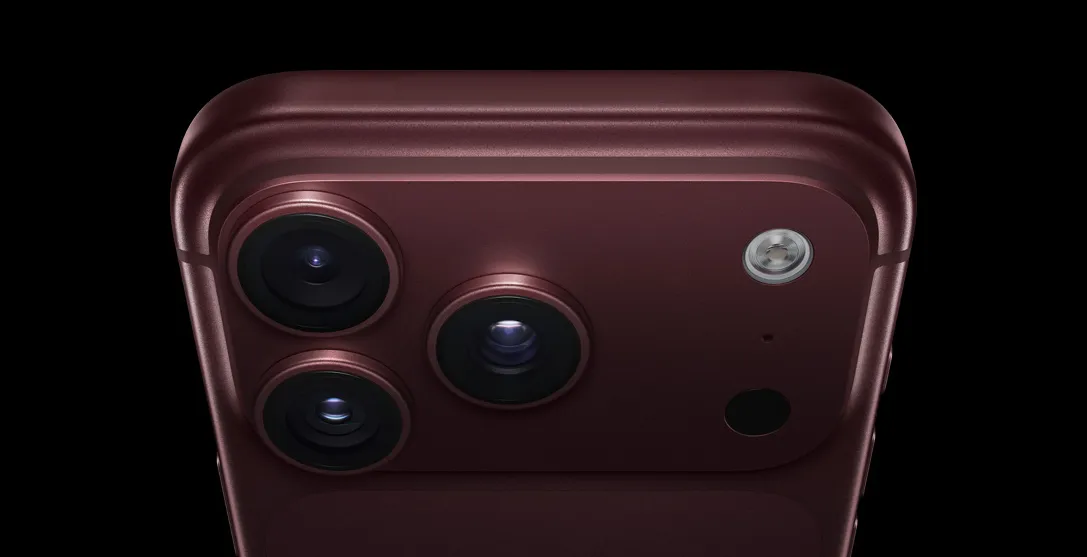
The iPhone 18 Pro brings one of Apple's biggest camera changes in years.
The headline feature is a 48MP Fusion Main camera with a variable aperture, giving the iPhone control over how much light enters the lens for the first time. Apple says the camera can automatically adjust the aperture for lighting and depth of field, while photographers can also take manual control.
The rest of the system gets an upgrade too. The iPhone 18 Pro has 48MP sensors across all three rear cameras, up to 8x optical-quality zoom, new Pro controls, improved low-light video and Apple's latest photography and video features.
Here's everything you need to know about the iPhone 18 Pro camera.
iPhone 18 Pro camera specs at a glance
Camera | Specifications |
|---|---|
Main | 48MP Fusion Main |
Main aperture | ƒ/1.48, ƒ/1.8, ƒ/2.8, ƒ/4.0 |
Main focal length | 24mm / 48mm |
Ultra Wide | 48MP Fusion Ultra Wide |
Ultra Wide focal length | 13mm |
Ultra Wide aperture | ƒ/2.2 |
Telephoto | 48MP Fusion Telephoto |
Telephoto focal length | 100mm / 200mm |
Telephoto aperture | ƒ/2.8 |
Optical-quality zoom | Up to 8x |
Optical zoom range | 16x |
Digital zoom | Up to 40x |
Front camera | 18MP Center Stage |
Macro photography | 48MP |
ProRAW | Yes |
Apple Log 2 | Yes |
ProRes RAW | Yes |
4K Dolby Vision | Up to 120fps |
Dual Capture | Up to 4K Dolby Vision at 30fps |
Apple's official technical specifications confirm the three-camera setup and the four selectable aperture settings on the Main camera.
The biggest upgrade: variable aperture
The most important change is the variable aperture on the 48MP Fusion Main camera.
Previous iPhones used a fixed physical aperture. The iPhone 18 Pro can now change the aperture between:
ƒ/1.48
ƒ/1.8
ƒ/2.8
ƒ/4.0
Six laser-cut blades inside the camera move to change the opening. Apple says the system can automatically select an aperture based on lighting and depth-of-field requirements, while Pro controls let users manually choose among the four settings.
This gives the Main camera more control over the final image.
ƒ/1.48: more light
The widest ƒ/1.48 setting allows more light to reach the sensor.
Apple says this can provide around 50% better low-light performance, making it particularly useful indoors and in darker scenes.
It can also help the phone capture Night mode photos more quickly.
ƒ/1.8: everyday shooting
ƒ/1.8 is the default setting.
Apple describes it as a balance between light gathering and depth of field.
This is likely to be the aperture you'll use most often because it works well across a broad range of everyday situations.
ƒ/2.8: more depth
Closing the aperture to ƒ/2.8 increases the depth of field.
That can be useful when you're photographing a group of people or a scene where you want more of the background to remain sharp.
ƒ/4.0: maximum depth
The narrowest aperture is ƒ/4.0.
Apple says it can be used for greater depth of field and creative effects, including starburst effects around bright lights.
For people who enjoy manual photography, this is one of the most interesting additions to the iPhone 18 Pro.
48MP Fusion Main camera
The Main camera remains the primary camera you'll use for everyday photography.
It has:
48MP sensor
24mm focal length
48mm optical-quality 2x option
ƒ/1.48–ƒ/4.0 variable aperture
Second-generation sensor-shift optical image stabilization
100% Focus Pixels
24MP and 48MP high-resolution photography
The sensor uses quad-pixel technology with 2.44µm quad-pixels, according to Apple's specifications.
The combination of a large high-resolution sensor and variable aperture gives the Main camera considerably more flexibility than a fixed-aperture phone camera.
48MP Fusion Ultra Wide
The second camera is a 48MP Fusion Ultra Wide.
It has:
13mm focal length
ƒ/2.2 aperture
120-degree field of view
Hybrid Focus Pixels
24MP and 48MP high-resolution photos
Macro photography
The Ultra Wide camera is useful for landscapes, architecture, group photos and situations where you simply can't step far enough away from your subject.
It also doubles as the camera used for 48MP macro photography.
That's a significant upgrade if you like close-up photography.
48MP Fusion Telephoto
The third camera is a 48MP Fusion Telephoto.
It has a 100mm focal length for 4x optical zoom and also provides a 200mm 8x optical-quality option.
The telephoto camera uses:
48MP sensor
ƒ/2.8 aperture
Tetraprism design
3D sensor-shift optical image stabilization
Autofocus
100mm / 200mm focal lengths
24MP and 48MP high-resolution photos
Apple rates the system for up to 8x optical-quality zoom and a 16x optical-quality zoom range. Digital zoom goes up to 40x.
That's particularly useful for portraits, concerts, sports and distant subjects.
iPhone 18 Pro zoom explained
The three cameras give the iPhone 18 Pro a much broader zoom range than a single-camera or dual-camera system.
Here's how it breaks down:
Zoom | Camera |
|---|---|
0.5x | Ultra Wide |
1x | Main |
2x | Main optical-quality |
4x | Telephoto |
8x | Telephoto optical-quality |
Apple also provides digital zoom beyond the optical-quality range.
The result is a 16x optical-quality zoom range from 0.5x through 8x.
For everyday photography, the 1x and 2x settings will probably be the most commonly used. The 4x and 8x options are where the dedicated Telephoto camera becomes particularly useful.
Better low-light photography
Variable aperture isn't just about giving photographers manual control.
It also gives the iPhone 18 Pro more flexibility in difficult lighting.
The Main camera can automatically open to ƒ/1.48 when more light is needed. Apple says this results in around 50% better low-light performance.
This can help with:
Indoor photography
Night scenes
Restaurants
Concerts
Evening portraits
Street photography
Low-light video
The phone can also use Night mode and Apple's computational photography system alongside the variable aperture.
Pro camera controls
Apple is also giving users more direct control over the camera.
The Camera app now provides Pro controls for:
Aperture
Shutter speed
White balance
Viewing histogram
That means the iPhone 18 Pro isn't relying entirely on automatic photography.
If you know how to use manual camera settings, you can make more deliberate decisions about exposure and depth of field.
Developers can also access aperture controls through an API, allowing third-party camera apps to make use of the variable-aperture system.
iPhone 18 Pro portraits
The variable aperture could be particularly useful for portraits.
At a wider aperture, you can get more background separation.
At narrower settings, you can keep more of the scene in focus.
Apple also continues to offer its computational portrait features, including Focus and Depth Control and Portrait Lighting.
This combination gives users two different ways to control the look of a portrait: computational processing and physical aperture control.
Photographic Styles 3
The iPhone 18 Pro also introduces Photographic Styles 3.
Apple says the new styles provide additional control over the look of photographs, including adjustments to texture and grain.
This is useful for people who want their photos to have a particular visual character without having to edit every image manually afterward.
Combined with Pro controls, the camera gives photographers more control over both capture and processing.
iPhone 18 Pro video recording
The iPhone 18 Pro isn't just about still photography.
It's also built around professional video production.
The Main camera can record 4K Dolby Vision video at up to 120fps.
Other video features include:
4K Dolby Vision
Cinematic mode up to 4K at 60fps
ProRes
ProRes RAW
Apple Log 2
Genlock
Action mode
Spatial video
Macro video
Slow motion
Time-lapse
Audio Mix
Dual Capture
The combination of ProRes RAW, Apple Log 2 and Genlock makes the iPhone 18 Pro particularly interesting for professional video workflows.
Better low-light video
Variable aperture also plays a role in video.
Apple says the iPhone 18 Pro can intelligently adjust aperture and frame rate for low-light video, helping produce brighter and clearer footage when shooting indoors or at night.
That's one of the areas where the variable-aperture system could have a noticeable advantage over previous iPhones.
Instead of simply relying on computational processing, the camera can physically change the amount of light entering the lens.
4K 120fps Dolby Vision
For creators, one of the standout video specifications is 4K Dolby Vision recording at up to 120fps using the Fusion Main camera.
That's useful for both high-frame-rate playback and slow-motion footage.
The phone also supports 4K 120fps ProRes when recording externally, according to Apple's specifications.
This pushes the iPhone further into territory traditionally occupied by dedicated cameras.
ProRes RAW and Apple Log 2
The iPhone 18 Pro supports ProRes RAW and Apple Log 2.
These features are aimed at people who want more control during post-production.
Apple Log 2 preserves more information for color grading, while ProRes RAW provides a professional workflow for working with captured footage.
The phone also supports the Academy Color Encoding System and Genlock for multi-camera synchronization.
For casual users, these features probably won't matter much.
For filmmakers and professional creators, they're a much bigger deal.
Dual Capture
The iPhone 18 Pro also supports Dual Capture.
This lets you record video from the front and rear cameras at the same time, with support for up to 4K Dolby Vision at 30fps.
It can be useful for:
Vlogging
Reaction videos
Travel content
Tutorials
Live event coverage
Recording yourself while showing what's happening in front of you
It's one of those features that sounds niche until you actually need it.
18MP Center Stage front camera
The front camera has also received an upgrade.
The iPhone 18 Pro uses an 18MP Center Stage camera with an ƒ/1.9 aperture and autofocus.
It supports:
Center Stage for photos
Center Stage for video calls
Dual Capture
Ultra-stabilized video
4K Dolby Vision
Portrait mode
Night mode
Photographic Styles 3
Smart focus tracking
Center Stage automatically keeps people in frame during supported video calls and recordings.
The camera can also tap and rotate between different framing options.
Is the iPhone 18 Pro camera better than the iPhone 17 Pro?
The biggest difference isn't simply the move to more megapixels.
The iPhone 18 Pro introduces variable aperture on the Main camera, giving it physical control over light and depth of field.
Apple also says the new system improves low-light photography and video, while the three rear cameras are now 48MP.
The Telephoto system also reaches 8x optical-quality zoom.
For someone upgrading from an older iPhone, these changes could make a much bigger difference than another incremental camera-processing upgrade.
Is the iPhone 18 Pro camera good for professional photography?
It is clearly designed with professional users in mind.
The hardware includes:
Three 48MP rear cameras
Variable aperture
Manual camera controls
ProRAW
8x optical-quality zoom
Sensor-shift stabilization
Apple Log 2
ProRes RAW
Genlock
4K 120fps Dolby Vision
That doesn't mean the iPhone replaces a dedicated professional camera in every situation.
A full-size camera still has advantages in areas such as interchangeable lenses, sensor size and physical controls.
But the iPhone 18 Pro now offers a remarkably broad set of controls and recording formats in a device that fits into your pocket.
iPhone 18 Pro camera: The bottom line
The variable-aperture 48MP Fusion Main camera is the headline feature, but it's not the only camera upgrade worth talking about.
The iPhone 18 Pro now has three 48MP rear cameras, with the Ultra Wide handling 0.5x and macro shots and the Telephoto reaching up to 8x optical-quality zoom.
The Main camera's four aperture settings give users more control over light and depth of field, while Apple's automatic system can make those decisions for you when you don't want to think about camera settings.
Video creators get an equally strong set of upgrades, including 4K 120fps Dolby Vision, ProRes RAW, Apple Log 2, Genlock and Dual Capture.
For everyday users, the biggest benefit may simply be better photos in difficult lighting and more flexibility when shooting people and groups.
For photographers and creators, the variable aperture and expanded Pro controls are the more interesting story.
The iPhone 18 Pro camera isn't just about taking higher-resolution photos. It's about giving the iPhone more control over how those photos and videos are captured.
For the next article in this cluster, the natural follow-up is “iPhone 18 Pro Variable Aperture Explained: What Does ƒ/1.48 to ƒ/4.0 Actually Mean?” That can target the more specific variable-aperture search intent without competing with this broader camera guide.
Comments
No comments yet — be the first to comment.