
Xiaomi 18 Pro Max vs. iPhone 18 Pro Max: Can This iPhone Imposter Finally Win?
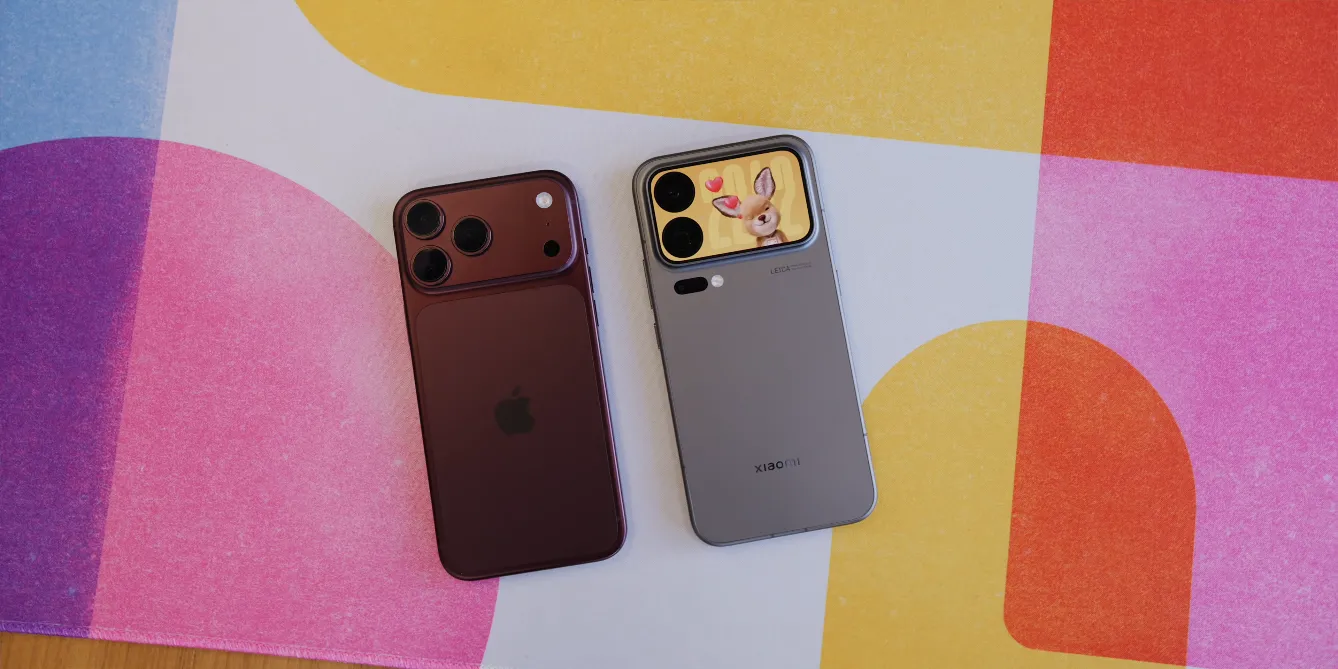
Last year, Xiaomi surprised everyone by launching a phone that was, let's be honest, a pretty blatant attempt to one-up the iPhone. The Xiaomi 17 Pro Max wasn't just a copycat; it actively tried to beat Apple's best. Now, they're back for round two. Just a month after Apple dropped the iPhone 18 Pro Max, here comes the Xiaomi 18 Pro Max, and it’s clear they’re not just playing catch-up anymore. This year, Xiaomi isn't just trying to match the iPhone; they're aiming to surpass its latest updates.
From a distance, the Xiaomi 18 Pro Max still wears its iPhone inspiration on its sleeve. The shape, the general aesthetic – it’s all familiar territory for anyone who’s ever held an iPhone. But dig a little deeper, and you’ll find Xiaomi has packed in a significant number of upgrades that go beyond mere imitation. So, let's break down what's new and see if this year, Xiaomi can finally claim victory.
Display: Privacy First, Gaze Second
When it comes to the display, both phones saw updates. Apple slimmed down its Dynamic Island. Xiaomi, however, already had a simple punch-hole cutout, so there wasn't much to shrink. Their existing under-display ultrasonic fingerprint reader remains a highlight, offering lightning-fast unlocks. The real innovation for Xiaomi this year is a privacy display, a feature first seen on the Samsung Galaxy S26 Ultra.
This new screen technology can effectively block side viewing angles with a simple toggle. Xiaomi seems to have improved on the concept, allowing you to enable privacy mode for the entire screen, specific apps, or even based on location. But the most interesting addition is "gaze detection." The front-facing camera can identify if someone else is looking at your screen, and it will prompt you to activate the privacy display. It's a slightly hilarious, yet practical, feature that directly addresses a common user concern.
Performance: The 2nm Arms Race
Apple's iPhone 18 Pro Max received a significant performance boost with its new A20 Pro chip, their first 2nm processor, promising substantial gains. It's a tough act to follow. But Xiaomi is ready for the challenge. Their 18 Pro Max also sports a 2nm chip, this time the brand-new Snapdragon 8 Elite Extreme Gen 6. This is poised to become the flagship processor for most high-end phones over the next year.
On paper, this Snapdragon chip is a monster. We’re talking cores hitting 5GHz clock speeds, which is frankly insane. Benchmarks back up the claims, showing a 15-20% improvement over last year's already excellent chips. Whether you're flipping through pre-installed apps (this is the China version, so expect quite a few) or running demanding software, the Xiaomi 18 Pro Max absolutely flies. It's paired with a hefty 16GB of LPDDR 5x RAM and UFS 4.1 storage, all kept cool by a massive vapor chamber. While it has the hardware to be a dedicated gaming phone, it’s positioned as a regular flagship – albeit an incredibly powerful one.
It's worth noting Qualcomm's naming scheme here: the Pro model gets the Snapdragon 8 Elite Gen 6, while the Pro Max gets the "Extreme" version with slightly higher clock speeds. Ridiculous names aside, the performance is undeniable.
Battery Life: Bigger and Faster Charging
The iPhone 18 Pro Max saw battery improvements thanks to its efficiency gains from the 2nm chip and a slight capacity increase. Xiaomi takes a different approach. While it also benefits from the 2nm chip's efficiency, the 18 Pro Max dramatically ups the ante with a massive 8,500 mAh battery, made possible by new, higher-density silicon. For context, that’s a huge leap from last year’s 7,500 mAh.
These battery numbers are getting wild. We’re seeing phones like the OnePlus 16 in China sporting 9,000 mAh, and others pushing past 10,000 mAh. While a huge battery doesn't automatically guarantee the best endurance, it certainly doesn't hurt. Impressively, Xiaomi achieves this massive capacity without ditching the SIM tray or making the phone significantly heavier than its iPhone counterpart.
And then there's the charging. The Xiaomi 18 Pro Max ships with a 100W charger in the box. While 50W charging on the iPhone is good, Xiaomi’s silicon-carbon batteries are achieving truly astonishing rates. A quick five-minute charge, starting from 12%, saw the phone jump to 25% while consistently pulling around 80W. That's incredibly fast. Add 50W wireless charging and reverse wireless charging (enough to fully charge an iPhone and still have juice left over), and you've got a charging powerhouse.
Cameras: Megapixels Galore
Apple’s camera upgrade for the iPhone 18 Pro Max focuses on refinement: four 48-megapixel sensors all around, with the main camera now featuring a variable aperture lens. It's a subtle but interesting improvement, offering more manual control for photographers.
Xiaomi, however, has gone the megapixel route. They've completely revamped their camera system, swapping last year's triple 50MP setup for a new 200-megapixel main camera, a 200-megapixel telephoto camera, and a 50-megapixel ultrawide. While there's no variable aperture, the sheer sensor size and resolution across the board are impressive. The telephoto sensor, in particular, is massive – comparable to the primary cameras on many other flagship phones. With 200 megapixels to play with, there’s significant room for cropping and digital zoom.
The full camera package includes shooting in 200MP mode, various color profiles, and 8K video recording. But the real showstopper might be the display on the back. This secondary screen can be used as a high-quality viewfinder for selfies, effectively letting you use the main camera sensors for self-portraits – a feature we're unlikely to see on an iPhone anytime soon. Beyond that, it offers customization, widgets, and even acts as a secondary speaker grille.
The Xiaomi Ecosystem and iPhone Comfort
While this isn't a full review – daily driving a Chinese version of a phone with potential Google Play hurdles is tricky – early impressions are strong. There are rumors of a global launch, which would be very exciting. Even with the language barrier and app compatibility challenges on the China version, getting Google Play installed allowed for a solid taste of the user experience.
The common narrative in smartphone comparisons often highlights the iPhone's superior software optimization and user experience, despite Android phones often boasting more impressive hardware specs. Xiaomi, however, seems to be bridging that gap. If they can refine the software smoothness and efficiency to match their raw horsepower, they could truly offer the best of both worlds.
Let's circle back to that privacy display. Xiaomi's implementation uses what they call "hyper RGB," giving each pixel its own full red, green, and blue sub-pixel array. This results in less of a perceived resolution drop when privacy mode is active compared to Samsung's approach. It primarily obscures left and right viewing angles, not top and bottom. While there's a slight rainbow sheen at off-axis angles and some general reduction in viewing angles, the panel itself is incredibly bright, hitting 4,000 nits. For many, this trade-off is well worth it. A minor quibble: the privacy display settings are buried under "privacy settings" rather than the more intuitive "display settings."
Another point of contention is the new physical button on the side. Apple's Action Button offers broad customization. Xiaomi's button, however, is strictly an "AI button." A single press can do nothing or add what you're doing to Xiaomi's AI memory – a feature most users likely won't engage with. A long press offers slightly more utility: launching voice notes, switching to silent mode, or enabling the privacy display. It feels like a missed opportunity to allow users to launch any app they choose, similar to the iPhone's approach.
The back screen continues to be a unique selling point. With flush camera rings, it's easier to interact with, though potentially more prone to smudges. The addition of hidden speakers on the back, one top and one bottom, doesn't seem to drastically alter sound quality but shifts the speaker direction. It’s features like this – the customizable back screen, widgets, and unique camera functionality – that firmly differentiate Xiaomi from the iPhone, which is unlikely to adopt such experimental hardware.
Xiaomi’s ecosystem is vast, encompassing tablets, smart home devices, and even cars. Their strategy with phones like this is clearly to make switching from iOS as comfortable as possible. This includes mirroring iPhone aesthetics and features, such as a Dynamic Island-like cutout, quick control center access, and even materials that feel like Apple’s "liquid glass."
Verdict: The Best iPhone Alternative Yet?
The Xiaomi 18 Pro Max is undeniably an impressive piece of hardware. It takes the familiar comfort of an iPhone-like design and pairs it with cutting-edge technology that often surpasses Apple's offerings. The privacy display, the insane battery capacity, the blazing-fast charging, and the megapixel-heavy camera system are all significant upgrades.
While the software optimization still has a little way to go to perfectly match the iPhone's fluidity, Xiaomi is closer than ever. The dedicated AI button feels like a step back in customization, and the ultrawide camera, while functional, remains an afterthought compared to the other two impressive sensors. However, for users who want the raw power, the unique features like the back display, and the sheer battery endurance, the Xiaomi 18 Pro Max presents a compelling alternative to the iPhone 18 Pro Max. It’s not just a copy anymore; it’s a serious contender.
Feature | iPhone 18 Pro Max | Xiaomi 18 Pro Max |
|---|---|---|
Processor | A20 Pro (2nm) | Snapdragon 8 Elite Extreme Gen 6 (2nm) |
Display | Dynamic Island | Punch-hole cutout, Privacy Display, 4000 nits |
RAM | (Typically 8GB) | 16GB LPDDR 5x |
Storage | UFS 3.1/4.0 | UFS 4.1 |
Main Camera | 48MP with Variable Aperture | 200MP |
Telephoto Camera | 48MP | 200MP (3.2x optical) |
Ultrawide Camera | 48MP | 50MP |
Battery Capacity | (Approx. 4500-4700 mAh) | 8500 mAh |
Wired Charging | 50W | 100W |
Wireless Charging | 15-20W MagSafe | 50W |
Biometrics | Face ID | Under-display Fingerprint Scanner |
Unique Feature | Variable Aperture | Rear Display, Gaze Detection, AI Button |
Comments
No comments yet — be the first to comment.