
Xiaomi 18 Fold vs. iPhone 17 Duo: Specs Showdown, But Does It Beat the Best?
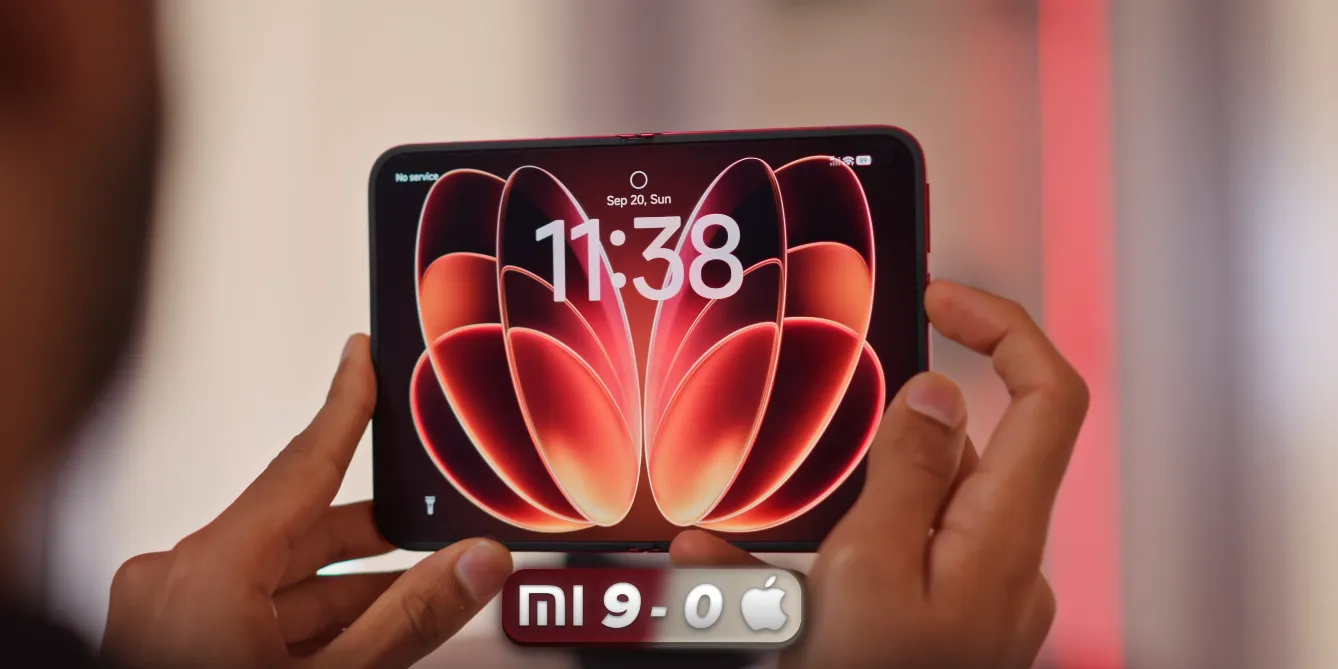
Xiaomi's latest foldable, the 18 Fold, has arrived, and it's making a loud statement. Last year, they famously mirrored Apple's iPhone 17 Pro and Pro Max with their own 17 Pro and Pro Max, even skipping the iPhone's number 16 to keep pace. This year, the gloves are off. The Xiaomi 18 Fold isn't just like the iPhone; it feels deliberately designed to go toe-to-toe with Apple's offering. While we expect Xiaomi to obliterate Apple on raw specs, the real question is: after spending time with both, does the 18 Fold actually deliver a better overall experience?
Unboxing and First Impressions: A Familiar Feeling
In true Xiaomi fashion, the 18 Fold doesn't skimp on the extras. Unlike Apple, which often ships its flagship devices with little more than the phone and a cable, Xiaomi includes a charging brick and an official case right in the box. This isn't some flimsy accessory; it's a solid addition that immediately sets a different tone.
Design and Display: Almost Identical Twins
Let's get straight to it: the Xiaomi 18 Fold is eerily similar in size to the iPhone 17 Duo. Height-wise, they're identical down to the tenth of a millimeter. This means you get the same pocketability benefits, but also the same stretch when trying to navigate the 5.4-inch cover display with a single thumb. The dimensions, flat edges, and even the large radius corners on the display are all mirrored. This design choice is a smart one, maximizing screen real estate and steering clear of the awkward corner angles we've seen on other foldables, like the Google Pixel Fold.
The similarity extends to the aspect ratio, a notable 1.4:1. This is borrowed from the iPhone 17 Duo, which cleverly matches the aspect ratio of an A4 sheet of paper – perfect for printing and scaling. What this means for users is that the 5.4-inch cover display unfolds into a nearly identical 7.6-inch inner display. In theory, any app optimized for one screen should work flawlessly on the other.
And the crease? It's virtually gone. At 98% erased, you'll likely forget it's even there during everyday use.
Specs That Slam: How Xiaomi Tops Apple on Paper
While the design is a near copy, Xiaomi pulls ahead significantly in the specification department. Let's keep score:
Thickness: Xiaomi 18 Fold at 5.02mm (folded) vs. iPhone 17 Duo at 5.2mm. While not a huge difference when unfolded, it contributes to a more manageable profile.
Weight: This is a major win for Xiaomi. At just 219g, it's considerably lighter than the iPhone 17 Duo's 254g. This makes the Xiaomi one of the lightest foldables, while the iPhone is among the heaviest.
Battery: The 18 Fold packs a massive 6,000 mAh silicon carbon battery. This outclasses not only the iPhone 17 Duo's ~4,700 mAh but also most other non-folding flagships. In real-world use, this translates to the longest-lasting foldable experience the reviewer has had, combined with faster charging.
Charging: Xiaomi supports 67W wired charging compared to Apple's 60W. However, Apple's advertised 60W requires a specific charger and only boosts performance for a few minutes at the start, making Xiaomi's claim more substantial.
Display Brightness: Xiaomi boasts "super sunlight panels" with a peak brightness of 4,000 nits, significantly brighter than the iPhone's 3,000 nits.
Cameras: The 18 Fold features a more versatile camera system. It includes a 200MP main sensor (capable of 200MP selfies), a 50MP ultrawide, and crucially, a 50MP telephoto lens with 3.5x optical zoom – a feature missing on many competing passport-sized folds.
Connectivity: You get two physical SIM slots on the Xiaomi, whereas the iPhone has none.
Extras: An IR blaster for TV remote functionality and a pre-installed screen protector on the cover display are thoughtful additions.
Biometrics: Face unlock on the Xiaomi offers more convenience than the iPhone's Touch ID, though it's not as secure for sensitive transactions.
Price: Starting at the equivalent of $1640, the Xiaomi 18 Fold is significantly cheaper than the iPhone 17 Duo's $2000 price tag.
On paper, it's a clean sweep for Xiaomi. But hardware is only half the story.
Software Prowess: Where Xiaomi Pushes Boundaries
Apple made a big deal about the iPhone 17 Duo's dual-app multitasking. Xiaomi, however, takes this concept and explodes it. The 18 Fold can comfortably run six apps simultaneously, with two additional floating windows. You can stream YouTube, shop on AliExpress, browse Pinterest for wallpapers, listen to Spotify, check Autotrader, and use the calculator – all at once. These apps can be grouped and recalled with a single tap from the dock, resized individually, and managed with intuitive gestures. Swiping with four fingers brings up an overview of all running apps for easy management.
This level of multitasking feels less constrained than Apple's approach. The limitation isn't imposed by the company; it's based on how much the user can actually keep track of. Apps can be used in full-screen tablet mode or quickly switched between, offering a flexible user experience.
Xiaomi's strategy is clear: replicate the iPhone's look and feel (even down to "liquid glass"), launch around the same time, showcase superior hardware capabilities, and offer it at a lower price. It's a calculated move to capture market attention.
The Software Gap: Where the iPhone Still Shines
However, there's a subtle but critical difference that Xiaomi seems to overlook. The iPhone's true strength lies in its software, deeply integrated with its hardware. Xiaomi's software, while capable of impressive multitasking, often feels like a standard smartphone OS stretched over an unusual form factor.
Take the opening animation: Apple's is a smooth, polished transition. Xiaomi's is more abrupt, with the inner screen simply "popping" on halfway through. More importantly, app optimization is inconsistent. While Apple redesigned its dock and status icons for better space utilization, Xiaomi often leaves significant empty margins on the sides of apps – space that simply doesn't exist on a traditional phone. This suggests apps are being forced into the foldable format rather than being truly designed for it.
There are moments of brilliance: app icons rotating into landscape view, settings morphing from a phone view to a tablet view, and convenient notification dismissal. But these are often juxtaposed with sloppy execution. Xiaomi's own camera app displays uneven black bars, its weather app stretches low-resolution numbers, and third-party apps like Netflix and YouTube show UI glitches or misplaced elements when split-screened or rotated. Even pre-installed apps, including those from China, don't always handle the screen space elegantly.
While Apple's software experience might be less about raw numbers and more about refined polish, its optimization for the foldable form factor is undeniable. Apps on the iPhone 17 Duo, even in beta, generally utilize screen space well, a stark contrast to the sometimes awkward presentation on the Xiaomi 18 Fold.
Durability and Thermal Concerns: Aluminum vs. Titanium
The weight savings on the Xiaomi 18 Fold come at a cost: an aluminum frame instead of the iPhone's titanium. While aluminum is better at dissipating heat, the 18 Fold appears to struggle with thermal management, possibly due to its own designed Xiaomi chip. Despite impressive quoted performance gains (60% faster CPU, 85% faster GPU), the phone exhibits significant overheating issues. A 3D Mark stress test failed twice within 10 minutes, forcing the app to close due to overheating.
A thermal camera revealed that the side with the chip became searing hot, indicating poor heat distribution across the device. This could lead to long-term durability problems. Furthermore, the aluminum frame itself is more prone to scratches and wear over time compared to titanium.
Camera Caveats and Refinements
The 200MP main camera sounds impressive, but its sensor size is comparable to a base iPhone 17, and the output, according to the reviewer, is visually inferior. The ultrawide camera is also noted as being poor, with visible grain even in good lighting when recording video.
Xiaomi also misses out on several smaller but important foldable refinements found on the iPhone 17 Duo. There's no stylus support on either screen, the hinge mechanism feels less premium with a slightly scratchy sound and occasional clicks (unlike the smoother Samsung Z Fold 8 hinge), and the lack of anti-reflective coating means fingerprints are a constant issue. The crease, while similar in depth to Apple's, is more noticeable due to the absence of a top layer designed to disguise it. Even the speakers are described as grating.
The Bottom Line: A Feature-Rich Phone, But Is It Better?
The Xiaomi 18 Fold is undeniably impressive. It ticks a lot of boxes, offering significant advantages over the iPhone 17 Duo in areas like weight, price, and camera versatility. It feels like a spec sheet champion.
However, in its relentless pursuit of ticking those boxes, Xiaomi seems to have sacrificed the holistic, well-rounded experience that Apple has cultivated. The software, while capable of extreme multitasking, lacks the polish and optimization seen on the iPhone. The build materials and thermal management raise durability concerns, and the overall user experience, from the hinge to the speakers, feels less refined.
While software can improve with updates, Apple can't patch the iPhone's heft or the underlying design compromises. Yet, the Xiaomi 18 Fold, despite its hardware prowess, doesn't quite manage to dethrone the iPhone 17 Duo as the superior foldable experience. It's a powerful contender, but the subtle details matter.
Comments
No comments yet — be the first to comment.