
Nvidia Declares "Total Victory" Over PC Gamers, Other Tech News Briefly Mentioned
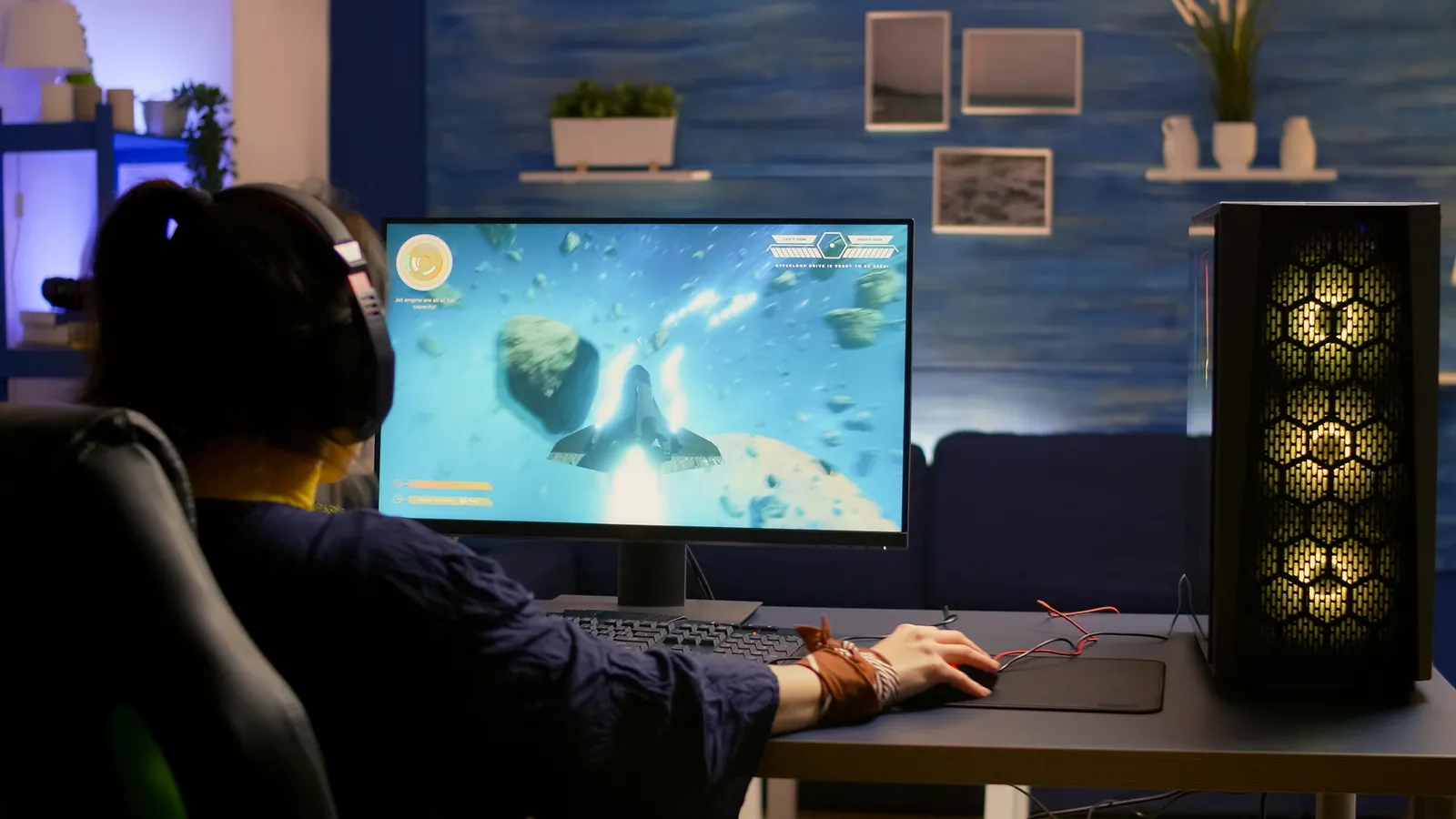
Nvidia has declared "complete and total victory" over PC gamers, marking a significant — and for many, disappointing — milestone in the company's long-standing strategy. The tech giant, often lauded for its early generosity in providing regular hardware launches with increasing performance and value, has seemingly shifted its focus away from the entry-level and budget segments of the GPU market.
Nvidia's "Win" Against PC Gamers
The narrative presented is one where Nvidia, through a decade-long campaign of escalating prices and the perceived obsolescence of budget-friendly options, has effectively eradicated the lower rungs of the PC gaming ladder. What was once a market segment characterized by accessibility and consistent upgrades has, according to this perspective, been largely abandoned in favor of higher-margin products.
CEO Jensen Huang, in a statement attributed to an AI avatar, humorously (or perhaps pointedly) cited a fully booked calendar for his unavailability to comment, adding a jab about "conjugal visits from all of our moms" and a commitment to "plowing through them all." This was framed as a final humiliation for gamers advocating for lower GPU prices.
Despite initial community solidarity and mockery directed at Nvidia's pricing strategies, the company's relentless approach appears to have paid off. The release of grossly overpriced GPUs, such as a hypothetical $2,000 RTX 5090, and the subsequent efforts to continuously inflate prices, reportedly left many consumers questioning objective reality. This week alone saw a $4,300 RTX 5090 sell out rapidly via a Walmart collaboration, demonstrating the effectiveness of what's described as a "SCOP campaign" (presumably a reference to pricing and market strategy) that dates back to the $1,000 GTX Titan.
The situation has reportedly escalated to extreme levels, with reports of RTX 5090s selling for $12,000, even at retailers like Micro Center. A specific example cited is the ROG Edition 21 combo, which included a special edition case, a 3000W PSU, a high-end motherboard, and an AIO cooler, originally priced at $10,350 and quickly rising to $10,850. Even at these astronomical figures, the revenue generated per GPU die is noted as less than that from dedicated AI chips sold to major clients.
The report highlights a critical "flanking maneuver" that impacted PC gamers unexpectedly: DRAM and storage. Driven by the immense demand from the AI sector, memory chips are now reportedly more expensive than compute chips on a per-area basis, a consequence of the AI gold rush Nvidia is seen as spearheading. The narrative concludes that Nvidia, having apparently secured its victory over PC gaming, can now shift its full attention to the AI market, continuing to profit from the infrastructure it has built.
Micron Shifts Focus from Consumer GPUs to Data Centers
Adding to the pressures on the consumer GPU market, Micron has reportedly discontinued production of 2 GB GDDR7 chips, the type used in gaming GPUs like Nvidia's RTX 50 series. While Samsung and SK Hynix remain key suppliers to Nvidia, Micron's decision to pivot to 3 GB GDDR7 chips — which are not currently utilized in gaming GPUs due to the non-launch of the RTX 50 Super series — signals a strategic move. This appears to prioritize pricier data center components over hardware potentially destined for consumer products.
AMD's Next-Gen Radeon GPU Teased via Linux Drivers
In somewhat brighter news for GPU enthusiasts not solely focused on Nvidia, AMD has provided an early glimpse of its next-generation Radeon GPU lineup. Patches submitted to the Linux kernel graphics driver include preparations for GDDR7 video memory support. While current Radeon GPUs utilize GDDR6, this update strongly indicates that future AMD cards will adopt GDDR7. This information surfaced due to AMD's robust driver support for Linux, a detail noted as a positive aspect of the Radeon team's efforts.
Intel's Nova Lake CPU Socket Spotted Online
While Intel's progress on the discrete GPU front remains subdued, anticipation is building for its upcoming CPU series. Leaked physical components for a new socket, designated LGA 1954, have appeared for sale on AliExpress. A solder-ready socket component, identified by Foxconn part number PE19547-11NK0-1H, was listed for $16.55. Further reinforcing these leaks, Thermal Grizzly launched its Micro Pro water block, a custom CPU cooler featuring a stainless steel finish and explicit support for Intel's anticipated Nova Lake desktop socket.
Grand Theft Auto 6 Collector's Set Lands with a Hefty Price Tag
Rockstar Games is gearing up for the November 19th console launch of Grand Theft Auto 6. Despite the game's immense built-in hype, the company has released a premium collectible set, the "Grand Theft Auto 6: The Good Time State Vice City Collection." This set comes with a significant $400 price tag and, notably, does not include the GTA 6 game itself.
The collection features items like a Gator figurine, a fanny pack, a hat, a metal tin with pins, stickers, and a map/poster. For those inclined towards the game's thematic elements, the set also includes a "swizzle spoon," a razor blade keychain, and a mirror, alongside a single shot glass. Arguably the most valuable component, depending on one's perspective, is a pair of Oakleys sunglasses.
Samsung Smart Fridges Bricked by Firmware Update
In a bizarre turn of events, Samsung pushed a firmware update to some of its smart refrigerators in Korea, which resulted in a number of units becoming "bricked." While Samsung has not disclosed the exact number of affected appliances, hundreds of complaints have surfaced. The incident raises questions about the necessity of internet connectivity and firmware updates for refrigerators, especially when such processes can lead to widespread spoilage of food for affected households.
This situation has fueled a broader discussion around the trend of "smart" technology, with a call for a return to simpler, "dumb" devices that have historically functioned reliably without internet connections.
And there you have it – another week of tech news. You can find links to all the articles discussed in the video description below.
Comments
No comments yet — be the first to comment.