
iPhone 18 Pro Review: The Chip is King, But the Rest is Quietly Excellent
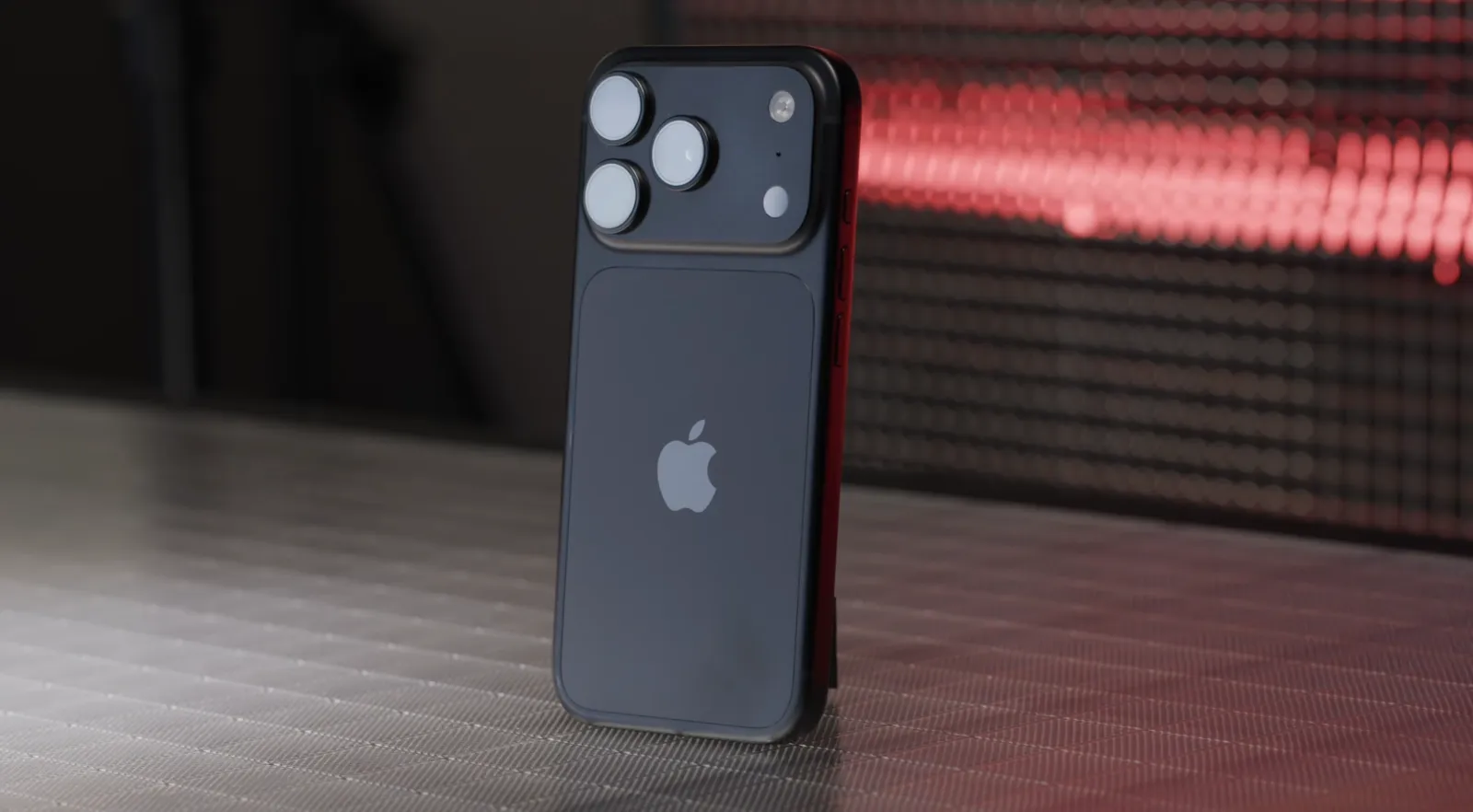
If you've been following Apple's iPhone cycle for any length of time, the iPhone 18 Pro might feel familiar. It's what we used to call an 'S' update: a refined version of the previous year's model, focused on internal upgrades rather than a radical redesign. Think a new chip, a tweaked camera, and better battery life, all wrapped up in a couple of fresh colors. On paper, it could easily be dismissed as just another incremental step.
But after spending a week with the iPhone 18 Pro, I've come to believe it's actually underrated. Yes, it's still astronomically expensive – we're talking $1,200 here – but the value proposition isn't about being cheap; it's about delivering the best possible iPhone experience, even if it's not the one grabbing headlines.
For two years running, the Pro iPhones have taken a backseat. Last year, it was the innovative iPhone Air. This year, all eyes are on the foldable Duo. Meanwhile, the flagship Pro model, which hasn't seen a truly groundbreaking feature in over a decade, has been quietly becoming the best iPhone Apple makes. Let's break down why.
The Camera: Subtle Sophistication
Physically, the camera hardware on the iPhone 18 Pro looks identical to the 17 Pro: a 48-megapixel primary, a 48-megapixel ultrawide, and a 48-megapixel 4x telephoto lens. The big story here, however, is the addition of a variable aperture lens on the main camera.
For as long as smartphones have existed, their camera lenses have had a fixed aperture, typically listed as a spec like f/2.2 or f/1.8. Lower numbers mean a wider opening, letting in more light – ideal for low-light shots. But the flip side is a shallower depth of field, meaning less of the scene is in sharp focus. Conversely, stopping down the aperture (higher f-numbers) brings more of the image into focus but requires more light.
The iPhone 18 Pro's new lens can open all the way to an impressive f/1.48, but it can also stop down to f/1.8, f/2.8, f/8, or f/4. Third-party apps are expected to offer even finer, smoother control.
So, does this make a huge difference? Honestly, in many everyday shots, the difference is subtle. You can see it in shots comparing f/1.48 versus f/4 – the latter brings more background detail into focus and offers greater overall sharpness. But at first glance, many users might not notice the difference between f/1.48 and f/4, just like they might not spot the difference between two similar white balance settings or shutter speeds.
But that's precisely the point of Pro tools. They offer creative control. This variable aperture is another dial for photographers to tweak, whether it's to bring more of a scene into focus, ensure maximum sharpness, or create artistic starburst effects from point lights thanks to the six-bladed aperture.
In automatic mode, the iPhone 18 Pro seems to default to the brighter apertures (f/1.48 or f/1.8) to maximize light capture. It didn't automatically stop down beyond those in my testing.
While the impact on this generation might be subtle, the potential is significant. Variable apertures have a more pronounced effect on larger sensors. Phones with massive 1-inch type sensors, for example, often suffer from extremely shallow depth of field, making it hard to get an entire subject in focus. Imagine that variable aperture feature working in tandem with those larger sensors – that's where it becomes a real game-changer. Hopefully, this is a feature that Apple will refine over time, perhaps eventually bringing it to its larger-sensor future iPhones.
Pro Controls Finally Arrive in the Stock App
Perhaps more impactful than the hardware tweaks are the software enhancements to the camera app itself. For years, the Pro iPhones have been somewhat limited by Apple's overly simple camera app, forcing users to rely on third-party solutions for granular control. No longer.
The iPhone 18 Pro’s built-in camera app now offers extensive pro controls. You can customize the interface, adding options like shutter speed, aspect ratio, and crucially, manual focus and manual white balance. This is a massive win for anyone who wants more control over their shots without needing a separate app.
My wishlist for Apple doesn't stop there. I'd love to see a Rec. 709 preview while shooting in Log video format, allowing for more accurate exposure control. And please, Apple, can we finally get 8K video recording? The 48-megapixel sensor is more than capable. With the new storage limit setting for ProRes footage in iOS 27, now seems like the perfect time.
The A20 Pro Chip: Efficiency Meets Power
Let's talk about the heart of the iPhone 18 Pro: the new A20 Pro chip. Built on a cutting-edge 2nm process, this chip, alongside the M6, represents a significant leap in performance and efficiency.
While benchmark scores can show peak improvements, and swiping through iOS demonstrates general speed, those aren't the most compelling arguments for this chip. The real story is how Apple has managed to deliver substantially better performance AND longer battery life in the same physical footprint.
Traditionally, chip updates offer one or the other: more power or better efficiency. The A20 Pro achieves both. Behind the scenes, Apple has moved DRAM off the main CPU package, placing it adjacent instead. This frees up space for a new, three times larger vapor chamber directly on the CPU, enabling significantly better thermal management.
For most users, the raw power increase might not be immediately noticeable in daily tasks. But for power users – those engaging in extended gaming sessions, or shooting hours of 4K video in hot conditions – the improved cooling is a tangible benefit. It means the phone can sustain peak performance for longer without throttling.
Beyond sustained performance, the benefits trickle down. Video exports are noticeably faster, image processing is quicker, and the Neural Engine, now doubled in capacity, powers on-device AI tasks more efficiently. Even Siri feels snappier.
This chip is so impressive, it even has me excited for the next generation MacBook Neo, which will likely feature the A20 Pro. With 12GB of RAM, it could rival M1-level performance in a laptop form factor. This 2nm node is a clear indicator that Moore's Law is far from dead, pushing transistor sizes closer to individual atoms.
Battery Life: Still King
Apple has long touted industry-leading battery life, and the iPhone 18 Pro continues that trend. While the iPhone 17 Pro made significant strides by increasing its physical size and battery capacity, the 18 Pro achieves its endurance gains primarily through efficiency, not just brute force.
The spec sheet claims 36 hours of video playback and 30 hours of mixed usage. For me, the real standout is that the smaller iPhone 18 Pro matches the battery life expectation of last year's Pro Max model. Throughout my testing, it easily lasted a day and a half, and with lighter use, it could stretch into two full days. This is with heavy brightness, constant photography, and two hours of daily CarPlay usage.
The battery capacity itself hasn't dramatically increased – maybe by 3% – so the leap in longevity is thanks to the A20 Pro's efficiency. It’s silicon engineering at its finest.
On the charging front, Apple has also made significant improvements. Plugging into a 67W charger, the iPhone 18 Pro pulled a sustained 45W, making their claim of 7 hours of video playback after just 5 minutes of wired charging seem entirely plausible.
For those opting for the Pro Max, it receives a slightly larger battery, estimated around 5,500 mAh. It's a bit frustrating that Apple doesn't readily share these battery capacities, forcing us to rely on teardowns or EU regulatory filings for the exact numbers. The US model, being eSIM-only, likely has a slightly larger capacity than its European counterpart, but we'll have to wait for confirmation.
Other Notable Improvements
Beyond the chip and camera, a few other updates are worth mentioning:
C2 Modem: Expected to contribute further to efficiency and battery life.
New Colors: Burgundy (which I find rather unappealing), Glacier Blue (a pleasant light sky blue), and a new Matte Black (my personal favorite, despite showing fingerprints).
Smaller Dynamic Island: Achieved by relocating the infrared Face ID sensor to the top-left corner, beneath the display. This allows for up to three Live Activities to be displayed simultaneously at the top of the screen.
The Bottom Line
The iPhone 18 Pro isn't a device that reinvents the wheel. It's the expected evolution of Apple's flagship smartphone. The A20 Pro chip is the undeniable star, bringing class-leading performance and efficiency that translates to longer battery life and better sustained performance. The variable aperture camera, while subtle now, holds promise for the future.
Is it perfect? No. Is it expensive? Absolutely. But is it exactly what we expected? Yes. And there's a certain comfort and value in that predictable, quiet excellence. For those seeking the best iPhone Apple currently offers, the 18 Pro delivers, powered by a chip that truly punches above its weight.
Comments
No comments yet — be the first to comment.