
England's Player Withdrawals and Thomas Tuchel's England Future: A Deep Dive
Player withdrawals have become a recurring headache for national teams, and England is no exception. As the Three Lions prepare for a series of high-profile international fixtures, a growing number of players have pulled out of the squad, sparking debate about player commitment, club versus country obligations, and the manager's strategy.
The Growing Problem of Player Withdrawals
The issue of players withdrawing from national squads is a complex one, with differing perspectives. For some, like former Ireland international Stephen Ireland, the very idea of pulling out of a national call-up is unthinkable. "There is no way I ever would have pulled out of being called up for my national team," he stated. "I often went there injured and come back to my cup injured." This sentiment highlights a deeply ingrained belief that representing one's country should be the ultimate priority, overriding personal comfort or even minor fitness concerns.
However, the modern game presents a different reality. Players are playing more games than ever, and the intensity of club football, particularly in leagues like the Premier League, leaves many physically and mentally drained. The conversation between player and manager is crucial here. "I think if there's players that are getting criticism or flack for for pulling out as if it's on their shoulders, the the you know, I think Tuka probably should come out. Listen, we've told this player should have a rest," suggests Ireland, implying that a more transparent dialogue is needed. He believes that if a player is advised by the manager to take time off, that information should be public to shield the player from undue criticism.
Ireland's own experience underscores the pressure. "I've had my club tell me they didn't want me to go and I've still gone," he recalled. "Once that international call-up comes in, then the club are legally obliged to let you go... So, it's a club are trying to steer you in that direction. Um, and for me it was always I wanted to go. I never wanted to miss out. It's such an honor." This illustrates the clash between club directives and the player's personal desire to represent their nation.
The Impact of the New International Calendar
Adding another layer to this issue is the significant alteration of the international football calendar. As Dave explained, the shift to an extended three-week international break in September, replacing the previous shorter breaks, fundamentally changes the landscape. "This is the first time we've had an international break that's three weeks long. And I think some clubs are looking at this and thinking if there's any kind of injury um you know niggle problem with our key players, we do not want them away for 3 weeks."
This prolonged period away from club duty presents a greater risk for clubs. An injury sustained during a three-week international stint means a key player could be sidelined for a substantial portion of the domestic season. This increased risk is likely to lead to more instances of players being advised, or even pressured, by their clubs to withdraw from national duty.
Thomas Tuchel's Squad and Tactical Concerns
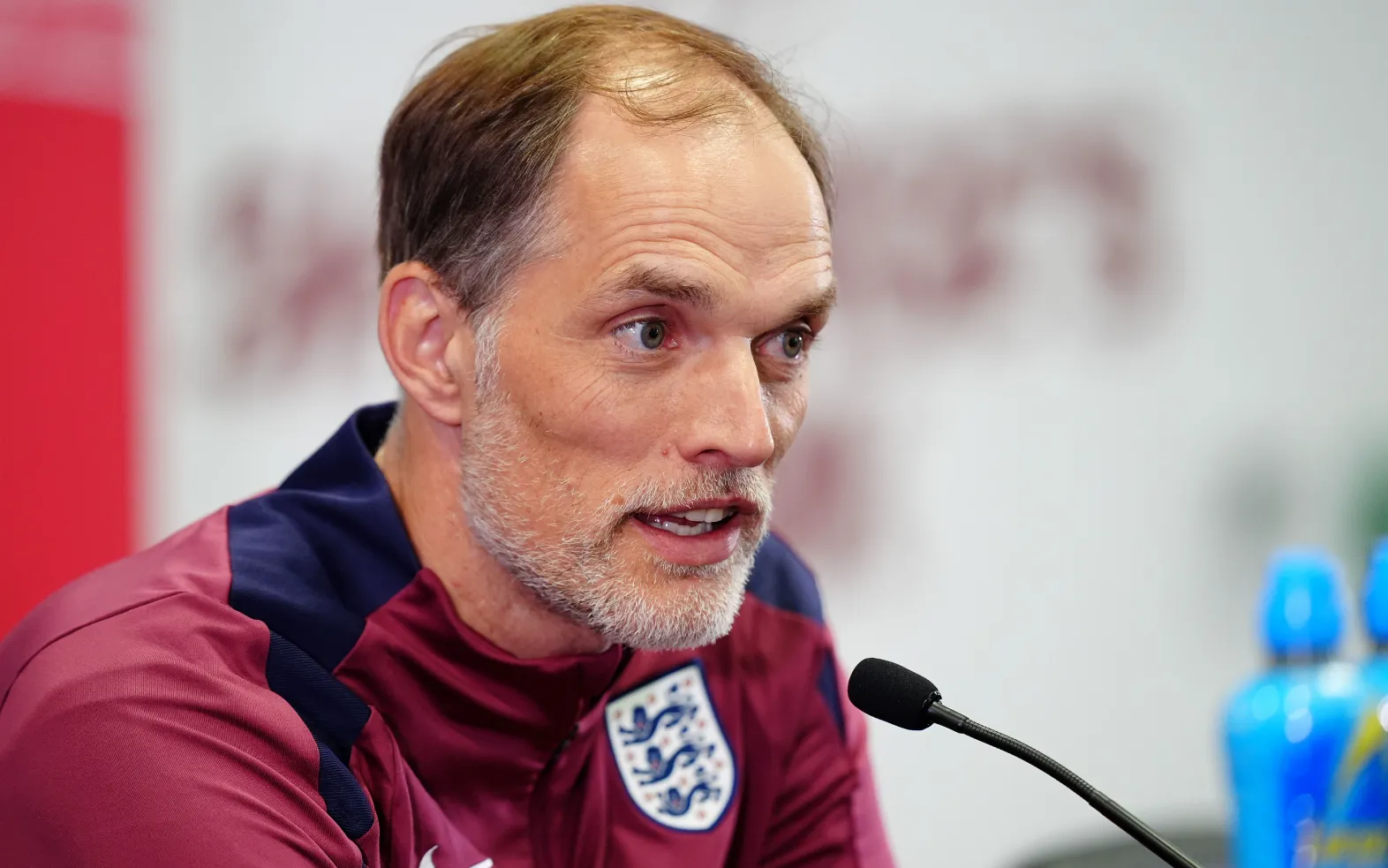
The current situation has placed England manager Thomas Tuchel in a difficult position. With multiple withdrawals, his squad numbers have been depleted, leaving him with only 23 players, and crucially, just 20 outfield players for a demanding schedule of four matches in 11 days. Rob Dorset highlighted the precariousness of this situation: "If any player gets injured, England won't be able to name a full bench for the next three matches."
Beyond squad numbers, there are deeper tactical questions surrounding Tuchel's approach. The former manager, Gareth Southgate, is credited with building a strong sense of 'brotherhood' within the squad. However, reports suggest that Tuchel's tactical decisions during the World Cup semi-final against Argentina, which saw England adopt an overly defensive stance, alienated some players and supporters. "Thomas Tukall, in my opinion, in a lot of other people's opinions, messed it up tactically in that semi-final against Europe. Went far too defensive far too early, and it cost England their place and their opportunity to win potentially the World Cup," Rob Dorset observed.
This analysis suggests that Tuchel has a significant task ahead: not only to manage his squad effectively but also to win back the confidence of both his players and the fanbase. The upcoming match against Spain, the reigning world and European champions, is being framed as a pivotal moment. A victory could solidify his position and silence critics, while a loss could intensify scrutiny on his management.
Key Players Under Pressure: Palmer and Gallagher
The withdrawals and squad selections raise questions about the international futures of several promising players, notably Cole Palmer and Kaikai Mayu. Both have shown flashes of brilliance at club level but have struggled to consistently feature for England.
Cole Palmer, despite his impressive form for Chelsea this season, has been hampered by injuries throughout his young career. "He's been extraordinary. He's been in great form for Chelsea," Rob Dorset noted. "So far this season, he's missed only a handful of minutes, two goal, four goals and two assists. He deserves his place in this England squad. And yet Thomas Tukl can't use him again." Palmer's inability to stay fit for crucial periods has meant he's only played three times under Tuchel and faces stiff competition for his preferred number 10 role, with players like Jude Bellingham and Morgan Rogers ahead of him.
Kaikai Mayu's situation is perhaps even more concerning. Having not played a single minute in the World Cup and appearing disillusioned, he has once again withdrawn from the squad due to injury. "What does Thomas Tukul make of that? Will he cut his losses and say, 'Look, I've got midfield options. I don't need Kobe Mayu,'" Dorset pondered. For both Palmer and Mayu, the current international break represents a critical juncture for their immediate England prospects.
Media Scrutiny and Tactical Identity
The performance and decisions of Thomas Tuchel are increasingly coming under the microscope of the media. Articles questioning his £5 million-a-year salary and suggesting a reliance on "vibes" rather than tangible tactical improvement reflect a growing impatience. The debate centers on whether Tuchel is doing enough to develop English players' technical skills, particularly in ball control and game management, which he himself has previously suggested are not inherent in the English footballing DNA.
However, the counter-argument is that international management offers limited time for deep coaching. "I don't think any international coach ever has ever improved a player through coaching. I just don't think it's physically possible," one commentator argued. The focus, therefore, should be on tactical setup and psychological preparation, enabling players to replicate their club form on the international stage. The distinct playing styles of nations like Spain, characterized by ball retention and a clear identity, are contrasted with England's more traditional emphasis on fight, aggression, and defensive solidity, even with their evident technical ability.
A poll on the publication's website revealed that a significant majority of fans (84%) would inquire about Tuchel's substitutions against Argentina, underscoring the lingering impact of that tactical decision and a perceived disconnect between the manager's public statements and fan sentiment.
Players with Something to Prove
This international break presents an opportunity for several players to make their case to Tuchel and the wider footballing world. Among those identified are:
Morgan Gibbs White: Controversially left out of the World Cup squad, his call-up following Cole Palmer's withdrawal is a chance to impress the manager.
Trent Alexander-Arnold: Despite his undoubted talent, Tuchel has been hesitant to fully utilize him, particularly in midfield. The manager has clarified Alexander-Arnold is in the squad as a right-back, adding pressure to perform in that role.
Lewis Hall: Considered by some to be the best left-back in the Premier League, Hall's inclusion is seen as overdue, with potential to be England's long-term solution in that position.
Dominic Calvert-Lewin: Eager to prove he's more than just an understudy to Harry Kane, Calvert-Lewin needs to show he offers a potent alternative when Kane is unavailable.
Perhaps the most significant figure with a point to prove is Thomas Tuchel himself. Having entered the World Cup with considerable goodwill, the semi-final defeat has cast a shadow. The expectation is that he must now demonstrate he can make the big decisions and lead England to major tournament success, a task for which he was specifically hired as an upgrade on Gareth Southgate.
The Bottom Line: A Defining Period for Tuchel
This international break is more than just a series of matches; it's a defining period for Thomas Tuchel's tenure as England manager. The ongoing issue of player withdrawals, coupled with tactical questions and the need to regain player and fan confidence, places immense pressure on his shoulders. The opening fixture against World Cup champions Spain is not just a test of England's capabilities but a crucial referendum on Tuchel's ability to manage at the highest level.
While the FA has publicly backed Tuchel with a contract extension, a poor showing in these upcoming games could irrevocably shift the narrative. The Nations League, once perhaps viewed as secondary, now represents a tangible opportunity for silverware and a chance for Tuchel to prove his worth, solidify his tactical approach, and silence the growing chorus of doubts.
Comments
No comments yet — be the first to comment.